13 August 2008

Taxisismo

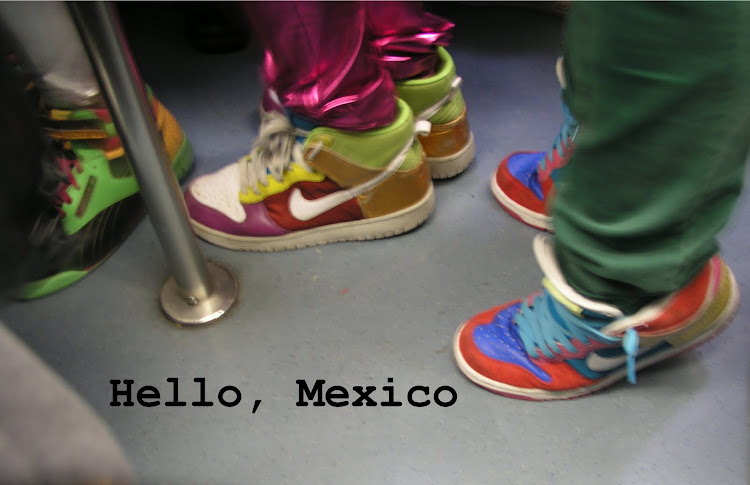
One of my least favorite groups of people in Mexico City is taxistas, or taxi drivers. Most, but not all, tend to be nacos, Mexican for someone with a limited level of education and culture; bad taste and bad manners; which would be equivalent to redneck or white trash in the U.S. Taxistas generally have a bad reputation for their reckless driving, muggings, assaulting, robbery and sexual harassment. They tend to reek and listen to bad music. Whenever I am about to enter a taxi, I always ask myself: "Am I going to die in this car?" If the answer is no, then I´ll get in. If my chances are high, then I´ll back away slowly and then run off.

In general, there are two types of taxis in Mexico City: legitimate and pirated. You can almost always tell the difference by their license plates. Legit taxis carry government-issued taxi plates, differentiated by a red or green bar at the bottom of the plate. Pirated taxis, on the other hand, use normal plates like other cars, but usually the loud exhaust, squealing tires and numerous dents give them away.

One downside to legitimate taxis, however, is that they are often as bad as pirated taxis. For example, I took a legit taxi the other day in the downtown, and the tires were noticeably loose. The taxi driver seemingly had little control over his car, and whenever we´d make a turn he´d fight with the steering wheel to make sure we didn´t veer off into oncoming traffic. I noticed, too, that he had a long, thin, discrete mirror attached to the sun visor, directly in view of the passenger´s crotch. Watch out, ladies.

All of this negative talk makes taxistas sound like the most horrible people around. Although they are close, taxi drivers have a few redeeming factors: they tend to have impressive knowledge of the city, they have the ability to weave and curve around traffic, they´re better than using mass transit on crowded days, and they´re cheap. Flag drop costs about sixty cents, and most taxi rides cost between $2 and $6. I´ve had good conversations with some taxistas, but most of the time they´re silent -- the majority barely talks to you.

One uncommon sight is to see a female taxista. I´ve only seen a few, and last wek was my first experience with one. It was a massively obese grandma driving a scummy little Beetle (many people still drive the old Beetles in Mexico, and lime-green Beetle taxis in Mexicoare ubiquitous) with no power steering. Interesting sight...


Beetle taxis (or Vochos) are as ubiquitous as ambulantes, a topic for another day :)


25 July 2008

BACK IN MÉXICO!

Hi bralapeños,


My blog has been dormant for almost three months, and I apologize to those loyal fans who missed out on bralapanews, but don´t worry, I´m back and eager to write...I´ll have PLENTY of stuff to blog about...

I´m living in Mexico City and am now working at an intellectual property law firm doing miscellaneous stuff (job title: etceterista and/or gringo-in-residence) such as translating legal documents, helping out lawyers and researching lucha libre (masked Mexican wrestling)!!!

Anyway, tune in to your favorite blog for more news bits, gossip, photography, moving pictures and things that your eyes like.

29 April 2008

Porn star Ron Jeremy and Pastor Craig Gross came to MSU last Thursday to debate porn.


Here's a video I made for a class. I could've spent more time editing it, and if I did it again I would've used a tripod, but that's something you realize when you see it on a bigger screen than the camcorder. I used iMovie 06 HD, which is surprisingly easy and a pleasure to work with, but a few things are irritating: namely, I couldn't find a way to merge audio and video once they're separated, and some of the timeline functions are buggy. Aside from that, '06 is a winner.


06 April 2008

April foolery

In writing the Distorter (the name the paper takes on during April Fools'), I was at first excited I'd make some biting commentary toward the university and student life. But the more I thought about it, the more I realized the risks I'd run into if I were to be as daring as I wanted to be.

Pretending to be an Onion contributor for a day is many college student reporters' dream, but there are some risks you run into. I had already decided I wouldn't target or name anyone, who wasn't well known. In other words, not directly mock any students or faculty, but more so administrators. Even poking fun at administrators, however, was risky, or at least I perceived it as such: I didn't want to burn any bridges or cause awkward tensions.

I had little to lose: I'm graduating next month, my position as editor will end soon and I doubted the stories I would've written would've put the paper in any sort of legal woes.

So why refrain from limitless mockery? Well, I didn't want to do anything I'd regret. At 11 p.m., jokey headlines and stories always seem more funny than when someone comes knocking at your door, demanding an apology or yelling at you for screwing with their reputation. In that regard, you have to think beyond the production-night punnery, and into the next day, and beyond.

So did we have fun while making a statement? Readers can decide for themselves.

***


The other day, I received a call from building services, which performs maintenance and cleaning at the university. They were upset about a story I'd written about an author who made a book about bathroom graffiti who was asking for submissions. Building services thought the story would provoke more incidences of graffiti and vandalism. I assured him it wasn't my intention to cause graffiti, and that I'd rewrite that part of the story calling for submissions.

So what to do when you write something like that? Just because you write it doesn't mean you condone or condemn it; you're just reporting on the facts, or ideally so. On the other hand, if you or your editor deemed it wasn't worthy of the paper's pages, you wouldn't pursue the story. That's attaching newsworthiness to certain topics. Although the intellectual merit of my story was obviously lacking, I thought it to be an interesting book and since everyone sees graffiti in their lives and perhaps wonders what becomes of it, it was newsworthy.


***

This has nothing to do with journalism, but I was thinking the other day: you know how brain cancer is supposedly linked to cell phone usage? What if researchers don't take into consideration the fact that cell phones add stress to your life? If you have a cell phone, you're always worrying that the battery is charged, or that you don't forget your phone, or that you check your texts and voicemails, or that someone is trying to call you, or that the phone is silenced. Plus, you submit yourself to the demands of everyone who has your number. On the other hand, if you didn't have a cell phone, you wouldn't have to worry about any of that; people would have to wait for you to return their calls. Perhaps it's not so much the electromagnetic-cancerous waves bouncing into your brain as the added cancer-inducing stress from having a cell phone that causes cancer.

In the past year I've went several times without cell phones, and in Mexico I depended on it far less because they are so expensive to use. For two weeks last semester I didn't have a cell, and it was nice. I dare readers to go without their cell phone for a day: how does it change your life?

30 March 2008

Who is your friend and who is your Facebook friend?

I know that time flies, but seeing that I haven't posted in over a month and the fact that it seems like yesterday I made that post, only reaffirms that adage.

Anyway, for my post I'll talk about Skype, becoming cross-eyed, and birthdays. Cell phones revolutionized how we communicate, and Skype doesn't so much revolutionize as evolve how we talk to each other.

Skype blows my mind. For starters, the fact that you can call almost any number in the world from your computer is amazing. But it's the features of Skype that make the program excellent: for example, you can buy a number in a foreign country for about $30 a year. People in that foreign country call that number and it calls your Skype account and pay what it costs to make a local call, rather than spending on long distance. Then, you can change the settings so that all calls received to your account are forwarded to another phone, such as your cell or landline. But wait, there's more! Let's suppose you have a cell carrier that doesn't have long distance. Instead of paying to call long distance, you can get a free SkypeOut local number (as long as you're paying for Skype Pro, at $3 monthly, which includes a myriad of other features) and you call that number -say a 507 number- which accesses your Skype account and you can use speed dial or enter any number, domestic, national or international. With SkypePro, you get free unlimited calls to anywhere in the US, but if you don't pay that $3 a month then it costs $.02 per minute, with other countries varying form $.02 a minute to up to $1.50 or so. There are also special Skype phones that have most of the features the Skype for computer has, but you need to be in a Wi-Fi hotspot to do so. But ultimately you can use the SkypeOut from your regular plain-jane cell phone. In effect, you have Skype wherever you go, regardless if you have a computer. Revolutionary or evolutionary?


That's shameless promotion for Skype, but once you have it and experience all its glory (other features such as voicemail, SMS, webcamming, instant messaging, and a strange feature - SkypeMe - in which you can call random people across the world and talk to them).

Skype certainly isn't the first application to take advantage of these features, but what it did was Apple-ize it, or, take those features, improve upon how the other apps failed at implementing them, or did them poorly, and Skype made them better, user-friendly, and squeaky-clean looking. Skype isn't perfect, that's for sure, as I have problems making calls sometimes using SkypeOut from my cell, but overall Skype is the PowerBook of an all-in-one telephony and instant messaging application.

****

One reason that print media will never go out of print, despite all it lacks when compared to snazzy online media, is the fact that it is very comfortable to read and look at. It can be very difficult to look at a computer screen for an extended period, and perhaps my biggest complaint about most online text is that it's too small. WAY too small....even when i adjust the setting on my computer, it's still too small. I always increase the size of the text, but usually that goofs up the layout of the page. I don't think my eyesight is -that- bad yet, but it might be that I just spend too much time in front of a computer and my eyes begin to hurt, my contacts dry and I start going cross-eyed, unable to control the muscles in my sockets. I wonder what animals think when they see us staring at a rectangular box with light flickering in our face? I remember seeing a comic one time, and I wish I could find it, but it has a family sitting on a couch after the power has went out and instead staring at the TV, they stare at a nail in the wall, and it has a good punchline. I wish I could remember it, but TV has killed many of my brain cells, including the one that remembered that joke.


****

So, today is my birthday, and although I got many salutations and "happy birthdays" in person and over the phone, only one person, my cousin, wished me happy birthday on Facebook. Not that I feel sad, but I just think it's funny how dependent we've become on technology. The thing is, I didn't have my birthday displayed on my profile until 11:30 p.m., on purpose, and I changed it so anyone seeing my profile would see my anniversary of life. And what do you know! As soon as I put public my birthday, I get a birthday wish from someone who I haven't talked to since last summer! For those of you not in the Facebook loop, the site compiles the birthdays of whoever's completing that day and puts a little birthday reminder section on the homepage. That way you can see birthdays of everyone in your network, and most peoples' networks consist of anybody from best friends to minor acquaintances and internent-only friends. Now, I don't expect acquaintances or distant friends to remember my birthday, but it just goes to show how much we need Facebook for birthday reminders, if anything else. Since I've had a Facebook account I've put public my b-day, and every year I'd get at least 30 birthday wishes, maybe even much more, and it irritated the hell out of me. I get all these people who, one day a year, decide to send me a brief wish for a good year and bla-bla-bla, and pretend to care, but the other 364 (or 365) days, when that message really would in fact make my day a little brighter (I have enough family and close friends wishing me a happy birthday as it is), those so-called friends don't decide to care. It's like Black History Month: you can care about it for one month, but the rest of the year blacks don't matter, according to Chris Rock. That's one of the reasons why I'm a little uneasy with birthdays. Oh, and the happy birthday song is annoying. I'm not a cynic, and I like good food, good company and a few presents, but it just makes me wonder how dependent we're becoming on technology to do stuff for us (ie, birthday reminders, or have an excuse not to make physical contact with someone and tell them in person, or the phone, to have a happy birthday).

I'll wait and see these next few days who sends me a belated-Facebook-birthday wish after making the connection of my birthday, the fact they didn't wish me a happy one, and the fact that I got few wishes on the Wall: in lieu of the belated birthday card, it's the belated birthday message on the Wall. That way, people will care (even if it's minimal and to the extent of writing a one-sentence greeting lacking punctuation and capitalization) when I most need it.